
Customer satisfaction is at the heart of ISO 9001:2015. In this post, we will explain how the standard drives improved customer experience, from better product/service quality to more effective communication. Companies will also learn how the ISO 9001 framework can help them build stronger, long-term relationships with customers.
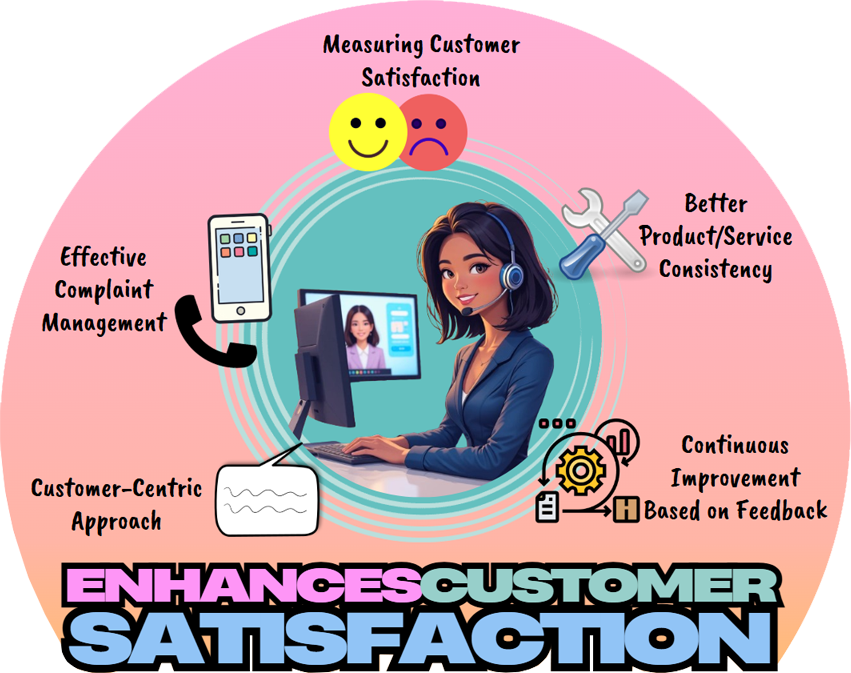
Customer-Centric Approach
How ISO 9001 Focuses on Meeting Customer Needs?
ISO 9001:2015 prioritizes customer satisfaction as one of its key principles, ensuring that organizations focus on understanding and meeting customer needs. This customer-centric approach is embedded in several aspects of the standard, including:
Customer Expectations and Requirements
The standard emphasizes identifying and analyzing customer needs and expectations. Organizations must understand both explicit customer requirements (e.g., specifications, timelines) and implicit needs (e.g., ease of use, additional services).
Customer Communication
Effective communication is critical for understanding customer needs and ensuring that expectations are met. ISO 9001 encourages companies to establish clear communication channels for engaging with customers before, during, and after the delivery of products and services.
Customer Satisfaction as a Performance Indicator
ISO 9001 requires organizations to regularly evaluate customer satisfaction as part of their performance metrics, ensuring that customers remain at the forefront of business decision-making.
By embedding a customer-first mindset, ISO 9001 helps organizations align their practices with the evolving needs and expectations of their customer base.
Better Product/Service Consistency
Standardizing Processes to Deliver High-Quality Outputs
One of the central tenets of ISO 9001:2015 is the standardization of processes to ensure that products and services are consistently delivered at a high level of quality. When businesses adopt this approach, they can achieve several benefits that directly contribute to customer satisfaction:
Consistent Quality
Standardizing processes minimizes variations in product/service quality. This ensures that every product or service meets the established standards and delivers consistent results, which is essential for customer trust and loyalty.
Reduced Errors
By following defined procedures and workflows, businesses can minimize human error and the risk of defects, leading to fewer mistakes and a higher rate of customer satisfaction.
Efficiency in Delivery
Streamlining processes helps ensure that products and services are delivered on time and within budget, meeting customer expectations for reliability and punctuality.
Customers appreciate consistency, and ISO 9001 ensures that your business consistently delivers high-quality outputs, which is key to retaining customers and building strong relationships.
Effective Complaint Management
Using ISO 9001 Tools to Resolve Issues Efficiently
Despite best efforts, issues can occasionally arise with products or services. How a business manages these situations has a direct impact on customer satisfaction. ISO 9001:2015 emphasizes the importance of handling complaints and resolving issues quickly and effectively:
Formal Complaint Handling System
ISO 9001 encourages businesses to establish a formal process for receiving and addressing customer complaints. This ensures that all complaints are taken seriously and handled in a systematic manner.
Root Cause Analysis
The standard advocates for identifying the root causes of complaints to prevent recurrence. Businesses are required to analyze the issue thoroughly to determine what went wrong and take corrective actions.
Prompt Response and Resolution
Timely responses to customer complaints are vital for maintaining trust. ISO 9001 ensures that businesses develop efficient processes for investigating and resolving issues quickly, which helps prevent customer dissatisfaction from escalating.
By addressing complaints effectively, businesses can demonstrate their commitment to quality and customer care, turning negative experiences into opportunities to build customer loyalty.
Measuring Customer Satisfaction
Using Surveys and Feedback Loops to Gauge Performance
ISO 9001:2015 places great emphasis on measuring and monitoring customer satisfaction, as this is a critical indicator of business success. By actively gathering feedback, organizations can gain valuable insights into their customers’ experiences and performance. This can be achieved through:
Surveys and Questionnaires
Regularly collecting customer feedback through surveys or questionnaires helps businesses assess satisfaction levels and identify areas for improvement.
Feedback Loops
ISO 9001 encourages creating feedback loops, where customer input is not only collected but analyzed and acted upon. This ensures that customer concerns are addressed and improvements are made based on real customer experiences.
Performance Metrics
The standard encourages organizations to establish clear, measurable indicators for customer satisfaction. This might include metrics such as customer retention rates, the frequency of complaints, and delivery timelines.
By measuring satisfaction continuously, businesses can gain an objective view of their performance and make data-driven decisions to improve customer experiences.
Continuous Improvement Based on Feedback
The Role of Customer Insights in Refining Processes
One of the defining features of ISO 9001:2015 is the emphasis on continual improvement. The standard advocates for organizations to use customer feedback and other performance data to identify areas for enhancement and refine their processes over time. Key aspects include:
Customer Insights as a Driver of Improvement
The feedback gathered from customers can be used to identify patterns, pain points, and areas where the business can improve. This helps organizations prioritize changes that will have the greatest impact on customer satisfaction.
Corrective and Preventive Actions
ISO 9001 requires organizations to take corrective actions when issues arise and preventive actions to avoid potential problems in the future. This ensures that businesses are always learning and evolving based on past experiences.
Ongoing Process Evaluation
Regular reviews of processes and customer feedback ensure that businesses remain agile and responsive to changing customer needs, helping them stay competitive in the marketplace.
By continuously refining processes based on customer feedback, organizations can maintain high levels of satisfaction and demonstrate a genuine commitment to improvement, which strengthens customer relationships.
Conclusion
ISO 9001:2015 is not just a set of guidelines for managing quality; it is a strategic framework designed to enhance customer satisfaction at every level. From focusing on customer needs and ensuring consistent product/service quality to implementing effective complaint management systems, measuring satisfaction, and continuously improving based on feedback, the standard provides businesses with the tools they need to deliver an exceptional customer experience.
By adopting ISO 9001:2015, businesses can not only improve their operational performance but also build stronger, longer-lasting relationships with their customers. Ultimately, these efforts lead to greater customer loyalty, better market positioning, and sustained growth.